Attic insulation sanitization and decontamination addresses severe biohazard reservoirs left by roof rats and mice across Riverside County properties. In neighborhoods near citrus groves like Victoria and Arlington,…
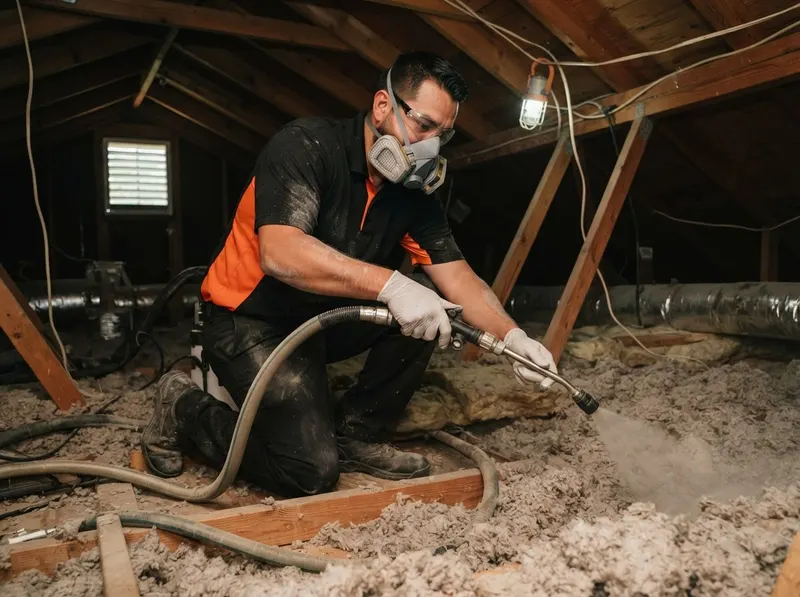
Attic insulation sanitization and decontamination addresses severe biohazard reservoirs left by roof rats and mice across Riverside County properties. In neighborhoods near citrus groves like Victoria and Arlington, roof rats frequently enter upper building envelopes through warped fascia or ridge vents. When rodents establish harborage in blown-in cellulose or rolled fiberglass, they saturate thermal barriers with urine, pheromone trails, and feces. Air exchange between the attic and living spaces through unsealed recessed lighting can pull airborne contaminants into primary residences. The decontamination protocol begins by extracting damaged batting using 20-horsepower commercial vacuums ducted directly to sealed outside receptacles, preventing particle dispersal inside living areas. Technical standards adhere to guidelines established by the Centers for Disease Control and Prevention for handling rodent-inhabited materials safely without dry-sweeping dust hazards.
Once raw substrates are exposed, the service applies an EPA-registered disinfectant across joists, ceiling drywall, and framing timbers to neutralize bacteria, pathogens, and foul odors. Structural surfaces are treated using misting equipment certified by the Institute of Inspection Cleaning and Restoration Certification to eliminate biological vectors without degrading timber integrity. In elevated areas such as Hawarden Hills and Canyon Crest, exterior thermal swings cause uninsulated framing to transmit heat rapidly; replacing contaminated media with modern Department of Energy R-38 insulation stabilizes indoor climate control during Inland Empire summers. Field operators wear personal protective equipment compliant with OSHA respiratory standards, utilizing HEPA-filtered air-purifying systems while operating within confined crawlspaces.
The decontamination process directly supports long-term exclusionary integrity outlined by the California Division of Occupational Safety and Health and state health mandates. In historic Downtown homes and mid-century properties in Casa Blanca, perimeter barriers must be paired with mechanical exclusion to prevent re-infestation. After physical waste removal and sanitization, technicians seal exterior entry points using 1/4-inch galvanized steel mesh as recommended by the University of California Statewide Integrated Pest Management Program. Sealing gaps alongside thorough ductwork assessment prevents thermal loss governed by the California Energy Commission Title 24 standards. To maintain local air quality, waste disposal procedures comply with the South Coast Air Quality Management District, ensuring airborne particulates are captured entirely on-site. Homeowners can reach MountainPeak Pest Services directly at (951) 709-8172 to arrange an attic inspection.
Every job gets a firm, written price after a free on-site visit.
For standards, safe disposal, and service guidance on pest control services in Riverside, CA, useful references include U.S. EPA, ENERGY STAR, U.S. Dept. of Energy, Consumer.gov, U.S. Census Bureau, and Google Maps. General consumer and small-business resources are available from USA.gov, Better Business Bureau, FTC Consumer Advice, U.S. Small Business Administration, and Ready.gov.
Tell us about your attic insulation sanitization and decontamination job in Riverside and we'll send a clear, written quote, usually the same day.
 MountainPeak Pest Services